The Face of Truth | Ibrahim Shglawi
Water Resources in the Eye of the Storm

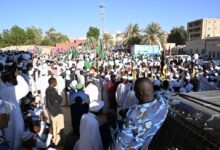
In the context of the transitional announcement for the formation of the “Government of Hope,” objective questions arise regarding the directions of restructuring the executive apparatus, particularly concerning the Ministry of Water Resources and Irrigation. The appointment of Professor Ismat Qurashi as Minister of Agriculture and Irrigation implicitly suggests a separation of irrigation responsibilities from other components of the ministry. This brings back to the forefront the discussion on the possibility of establishing an independent ministry dedicated to “Water Resources and Dams.” The rationale for this proposal stems from the strategic importance of this sector within Sudan’s geographic and political context—especially given its central position in the Nile Basin and the complexities surrounding regional water security.
The most striking—and perhaps concerning—paradox is that this appointment was announced on the very same day Ethiopian Prime Minister Abiy Ahmed declared the completion of the Grand Ethiopian Renaissance Dam (GERD), a critical juncture in the region’s water security. In contrast, Sudan’s response was to merge the Ministry of Irrigation with Agriculture, a move that some perceived as either a lack of awareness regarding the importance of the regional water dossier or a deliberate disregard for the sovereignty and strategic depth this ministry represents.
It is also worth noting the ongoing behind-the-scenes struggle concerning the Entebbe Agreement and the establishment of the Nile Basin Commission, which is expected to revisit the water-sharing agreements among basin countries and enforce prior approvals for any water security projects that member states intend to pursue.
This merger—portrayed by some as an administrative restructuring—carries deeper implications that warrant close attention. It raises questions about Dr. Kamal Idris’s vision of governance, institutional reform, and the rationale behind dismantling a ministry that, under successive governments, symbolized national sovereignty and sound technical administration. The Ministry of Water Resources, with its departments—such as meteorology, dams, reservoirs, hydroelectric generation, and water harvesting—is not merely an administrative unit, but one of the pillars of national security.
Past experiences—particularly during the government of Dr. Abdalla Hamdok—have shown how tampering with the structure of this ministry led to a significant decline in its performance. The portfolio was entrusted to an inexperienced minister at a time when the country was grappling with complex challenges, including the GERD dispute, water border conflicts, and deteriorating water infrastructure.
What further complicates the scene is that, despite the severe challenges facing the country during this sensitive phase, the Ministry of Irrigation and Water Resources—according to some observers—has not played the necessary role in the post-war landscape, particularly concerning the assessment of damages and the resumption of technical and institutional work. The previous minister, who also served as undersecretary, appeared to distance himself from executive fieldwork and became preoccupied with internal matters, which slowed operations and limited the participation of skilled professionals who have long formed the backbone of the ministry.
While we do not deny the difficulty of the circumstances or the pressure of the times, relying on a narrow circle to manage crucial files—while sidelining qualified personnel—has cast a shadow over the ministry’s performance. Many employees were placed on extended leave, and important files were left without adequate follow-up, at a time when other ministries were actively forming committees to assess damage and resume essential activities. Amid these national initiatives, the Ministry of Water Resources was noticeably absent from a scene it should have led, given its strategic role in rebuilding infrastructure and serving citizens.
The staggered announcement of the new cabinet, though promoted as a prioritization strategy, appears in certain aspects—such as the case of the Ministry of Water Resources—to be an attempt to restructure vital state institutions beyond the reach of public discourse or societal oversight. This raises fears that such moves may pave the way for even larger decisions to be made in secrecy, under the guise of “phased reform.”
From our perspective on #TheFaceOfTruth, the absence of a comprehensive vision for water management, and the dismantling of established technical institutions without clear alternatives, threatens to exact a heavy strategic cost—one that Sudan may pay through weakened water security, strained regional relations, and compromised future resources.
Will this approach withstand the test of time and challenges?
Or will the staggered cabinet reveal, in the end, the erosion of the very idea before the structure is even complete?
Wishing you well and in good health.
Friday, July 4, 2025
Shglawi55@gmail.com