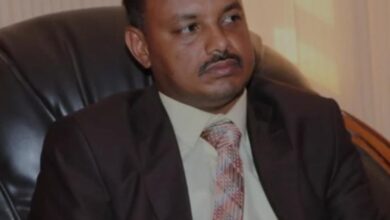
Face of Truth | Ibrahim Shaglawi … The Liberation of Khartoum… and the Fall of the Transnational Project


Face of Truth | Ibrahim Shaglawi
The Liberation of Khartoum… and the Fall of the Transnational Project

Since the overthrow of Al-Bashir’s regime in April 2019, the transitional phase that followed was not merely a space to correct the national course, as was promoted, but rather an entry point for preparing a soft political coup. This was carefully orchestrated by regional and international forces that sought to reengineer the Sudanese state on new foundations serving their interests and agendas, far from the aspirations of the Sudanese people. This preparation was not isolated; rather, it passed through specific stages, starting with the formation of the “International Quartet,” placing the country under international guardianship, followed by the “Lawyers’ Draft Constitution,” and culminating in the “Framework Agreement” which attempted to falsely legitimize the project of hijacking the state and restructuring it anew.
However, the failure of these plans to achieve soft control over the levers of power — due to the awareness of the Sudanese Armed Forces and national resistance — hastened the shift to the military option as a developed alternative, as mentioned by Dr. Maryam Al-Sadiq Al-Mahdi. Thus, the war erupted in April 2023, as the final episode in a comprehensive project that had failed to achieve its goals through civil and political tools, resorting instead to armed force to impose a new reality.
This is what we will attempt to examine by analyzing the dimensions of this major event, through a reading of the regional and international contexts surrounding it, and deconstructing its political and military implications, leading to an understanding of what it means for the state to reclaim its national capital.
Hence, the liberation of Khartoum from the grip of the Rapid Support Forces militia was not merely a restoration of security, but a revealing national moment that dropped the mask of the “deceptive political process” and exposed the dimensions of a foreign project that aimed to reshape Sudan in accordance with interests that neither recognize its sovereignty nor internalize its stability. The liberation of Khartoum is thus seen as the collapse of a system of interventions, bets, and cross-border tools that thought they could redraw the Sudanese scene in service of geopolitical balances and interests.
Some regional powers had bet on empowering the Rapid Support militia to become an alternative to the Sudanese state, investing in the fragility of the transitional phase, encouraging a coup against the civil path, and supported by a broad network of interests that included competition over ports and resources, intelligence penetration, and political infiltration. In contrast, influential international powers preferred silence or artificial balance, betting on prolonging the conflict as a means to subjugate the country and push it towards unequal negotiation or restructuring the state under their guardianship.
The liberation of Khartoum overturned these equations. For the first time since the outbreak of the war, the Sudanese state — represented by its army and popular resistance — succeeded in decisively reclaiming the capital and dismantling the militia’s largest field strongholds, in a scene that left no room for ambiguity: the army advanced, the militia collapsed, and foreign tools lost their bet on producing a parallel authority that perpetuates destruction.
Scenes emerging from areas like “Al-Salha” west of Omdurman — from the massive military arsenal left behind by the militia, to decomposing corpses in sealed boxes, and sites of torture and liquidation — revealed that what was being supported was not a political project, but a system of violence and domination. These facts, coinciding with the complete collapse of the militia’s fighters, dealt a resounding moral blow to international rhetoric that tried to frame the state and the rebellion as equals, based on the discourse of local militia supporters.
What further amplifies the importance of this event is the official return of the government to Khartoum and the resumption of its duties from the heart of the state, after months of forced displacement. The capital was not merely a military objective but a political hostage and a testing ground for the legitimacy of the state itself. That the government returns to manage the country’s affairs from there is a declaration of the end of a period of retreat and the beginning of a phase of national reformation from the center of sovereignty and leadership, for a Sudanese state that neither succumbs nor breaks, despite the unjust sanctions.
The return of citizens is a return to memory, dignity, and belonging to place. The neighborhoods that were abandoned, and the institutions that stopped functioning, are now rising again, affirming that Khartoum was not occupied, but was experiencing a moment of awareness and reclamation of national will. What happened did not bring down Sudan, but awakened it; did not fragment the state, but unified it; did not remove the capital from its people, but returned it to them — with pride and dignity that speak to the greatness of their army’s hundred-year experience and the greatness of the popular resistance when led by the sincere.
Thus, from what we see as the #Face_of_Truth, the liberation of Khartoum is not to be reduced to a victory statement, but is a signal of the beginning of a new phase, with the message that Sudan is not a fragile state whose future is shaped from the outside, but a deeply rooted homeland; the more they try to break it, the more cohesive it becomes. And if some think that support comes from major capitals, the Khartoum experience proves that national will — as expressed by thinker Imad Al-Din Khalil — is capable of “repelling external conspiracies and recreating history,” because a nation that overcomes its fear, defeats those who seek to occupy it.
Wishing you well and good health.
Friday, May 23, 2025
Shglawi55@gmail.com