Face of Truth | Ibrahim Shglawi
Jaber Committee: State Security or Power Seizure?
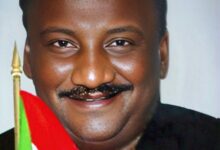

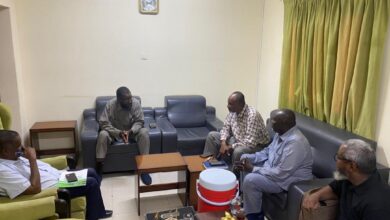
General Abdel Fattah Al-Burhan, Chairman of the Sovereignty Council, has issued a decision to form a High National Committee for the Rehabilitation of Khartoum State. The committee is headed by council member General Ibrahim Jaber and includes several members of the Sovereignty Council and executive ministers. This decision comes at a critical moment in Sudan’s statehood, where security calculations intersect with politics, and transitional dynamics clash with the question of authority.
The decision grants the committee broad powers, including the evacuation of all combat forces from the capital, removal of informal settlements, securing the city, deporting undocumented foreigners, and restoring basic services. While appearing as an effort to reorganize Khartoum and address the distortions left by war, these powers—according to observers—reflect a deeper attempt to reengineer the relationship between central authority and both civilian and military governance structures.
The decision raises significant concerns on several levels. Chief among them is that forming a committee with extensive executive powers, including cabinet members of the current civilian government led by Prime Minister Dr. Kamil Idris, essentially recreates a “parallel government” model. This raises serious constitutional questions about adherence to the 2025 amended Constitutional Document.
Some justify the move citing exceptional security circumstances and recent amendments that expanded the Sovereignty Council’s role in state affairs. However, the committee’s overlapping authority with key ministries—such as energy, education, health, interior, and infrastructure—may undermine the Cabinet’s influence. Notably, the absence of the Finance Minister, responsible for reconstruction funding and institutional guarantees, is a major flaw in the committee’s formation.
For the committee to succeed, its headquarters must be located within Khartoum itself. Remote management or reliance on reports will not suffice in the complex post-war environment. The situation on the ground demands physical presence, direct interaction with executive bodies, and readiness for rapid decision-making. Moreover, having the committee stationed in the capital would send a strong message—to both citizens and the international community—that the state is serious about rebuilding institutions and reasserting its authority on the ground.
The security component of the decision is particularly crucial, as it redefines who is allowed to be present in the capital and who must be relocated to combat fronts or training camps. From a professional security standpoint, only official security and civilian-oriented forces—such as police, military police, criminal investigations, general security, military intelligence, and national intelligence—should operate within cities. These are the entities qualified and legally empowered to manage urban security and sensitive civilian environments.
Combat troops and heavily armed forces, on the other hand, belong outside urban areas—in preparation camps or on the frontlines—not among markets, hospitals, and residential neighborhoods. This is the norm in regional and international capitals, where the presence of combat units inside cities is only allowed in extreme emergencies and under temporary exceptional orders.
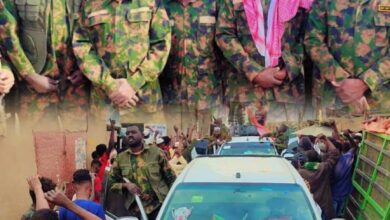
What is currently happening in Khartoum—where armed movements remain inside the city despite peace agreements—raises serious concerns. These forces have begun to entrench themselves within urban neighborhoods, sometimes forming alternative power centers in markets, thus threatening social cohesion and weakening the state’s authority.
Citizens, for their part, can no longer bear the return of scenes reminiscent of the pre-war period, when the Rapid Support Forces controlled key state infrastructure and later became a source of chaos during and after the conflict. Any similar military presence, even under the banner of “peace,” will be widely rejected by the public, who have lost trust in all armed entities operating outside the clear, regulated framework of the state.
One of the strengths of this decision is that it does not exempt the army from the new arrangements. It also calls for the repositioning of combat units outside the capital—part of a genuine effort to redefine the military’s role as a national force focused on protecting sovereignty, not managing civilian life.
Nevertheless, the exceptional circumstances Khartoum is facing may necessitate a limited, organized military presence on the city’s outskirts or within emergency camps, without disturbing the internal security balance or undermining the capital’s civilian nature.
Balancing the need for swift and decisive deterrence with the preservation of a civilian public sphere is the key to lasting stability.
As we see from the #Face_of_Truth, the decision reflects a clear direction toward stabilizing the security situation in the capital and reinforcing state centrality. However, it is also a true test of whether the transitional authority can shift from a mindset of control to a rule-of-law-based and accountable form of governance.
Between these two poles lies the outline of a new Sudanese state in the post-war era.
Wishing you well and in good health,
Sunday, July 20, 2025
Shglawi55@gmail.com