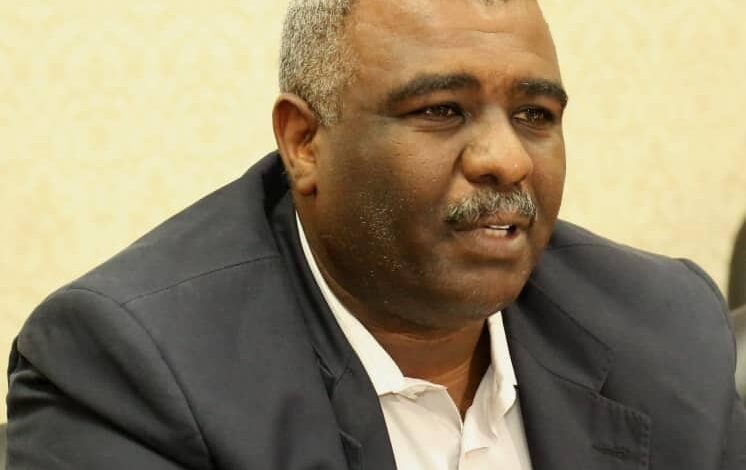
Face of Truth | Ibrahim Shglawi
The Gash River… and the New Dam Projects


At the beginning of the week, the Gash River witnessed an unprecedented rise in water levels at the Kassala Bridge station, reaching 290 centimeters, compared to 160 centimeters the previous day. This marks the highest level since the start of the rainy season this year. This rapid rise in water, which coincided with unprecedented rainfall in Kassala State, has reopened the file on the relationship between seasonal floods and the state’s plans for water resource management, especially amid increasing climate challenges.
The annual recurring floods in the Gash River represent a significant political and economic indicator of the gap in public policies regarding water as a strategic element of national security. Amid rising fears of a repeat of flood scenarios in areas such as Aroma and the Delta north of Kassala, local authorities quickly reinforced protection and control measures by strengthening embankments and addressing collapses as part of a defensive rather than developmental program.
Despite the existence of Sudanese Cabinet Resolution No. 16, issued in 2021, which returned the Gash Agricultural Project to the Ministry of Irrigation and Water Resources after years of administrative disputes. This decision, confirmed by the official Sudanese News Agency (SUNA), was a decisive step toward redefining the project as a sovereign asset with a developmental nature linked to both food and water security.
In light of this decision, the Ministry of Irrigation had previously moved to regain initiative and began arrangements to maintain and rehabilitate the project’s channels. A substantial budget was allocated by the Federal Ministry of Finance, according to the ministry’s Undersecretary, Engineer Daw Al-Bayt Abdulrahman. Official statements confirmed a clear orientation toward implementing urgent priorities, including supporting the river’s taming processes and developing the infrastructure of this historic agricultural project.
Supporting these efforts is a comprehensive technical study prepared by Consultant Engineer Othman Haidar Abdulhadi – a copy of which the writer obtained – which serves as a strategic hydrological reference for the Gash River basin. The study covers the period from 2015 to 2020 and relies on advanced analysis models such as HEC-HMS and WMS to estimate surface runoff, losses, and peak points, thus providing a solid database for formulating water harvesting projects and transforming the Gash into a permanently flowing river instead of a limited seasonal one.
The study’s recommendations included proposals for constructing strategic dams, most notably “Fodi Dam and Hakota Dam,” which could store more than one billion cubic meters of water—about 23% of the total water volume entering the Gash from Eritrea to the Atbara River. Analyses indicate that this could lead to regulated flow throughout the year, allowing the water to be used for drinking, irrigation, and power generation.
More importantly, the proposed developmental vision does not stop at merely building dams but extends to connecting the Gash River to the Atbara and Barka Rivers through a sub-network starting from the Kassala plains. This opens the door for regional water integration that ensures greater stability for residents and transforms seasonal threats into investment opportunities.
In this context, it is important to mention the cooperation expressed by local farmers with the government. Their leaders voiced satisfaction with the project’s return to the Ministry of Irrigation and affirmed their willingness to pay water fees, despite the decline in cultivated land to only 20,000 feddans compared to 80,000 previously.
However, all these hopes remain dependent on political will capable of transforming scientific data into implementable public policies. This requires more than just ministerial decisions or seasonal movements. Therefore, it necessitates a strategic vision that reorders state priorities around the concept of water security as a foundation for sovereignty and development.
It also requires higher institutional coordination between the Ministry of Irrigation and the concerned states and the provision of sustainable financing that goes beyond the limited allocations recently announced—”80 million pounds for Gash taming works and 50 million for the Gash Agricultural Project”—especially given the scale of investments needed to build dams, extend channels, establish maintenance and operation units, and train personnel.
According to what we see from #Face_of_Truth, the taming of the Gash River represents a real test of our country’s ability to turn challenges into opportunities. Amid climate fragility, political instability, and repeated displacement, water emerges as a central element in rebuilding the relationship between the state and society. Therefore, transforming the Gash into a permanent stream and connecting it to the eastern river network is a real developmental project. It is also a strategic step toward reshaping eastern Sudan as an active production hub. Investing in the Gash River is thus a national necessity that opens the door to integrated resource management and turns water from a seasonal crisis into a source of lasting development and achievable justice. If the intention is strong, the bodies will not fail.
Wishing you wellness and prosperity.
Sunday, August 17, 2025
Shglawi55@gmail.com
#Face_of_Truth
#Gash_River
#Kassala_Floods
#Gash_Agricultural_Project
#Eastern_Dams
#Water_Security
#East_Sudan_Development
#Water_Resources_Management
#Fodi_and_Hakota_Dams
#Turn_Gash_into_Permanent_River
#Ibrahim_Shglawi