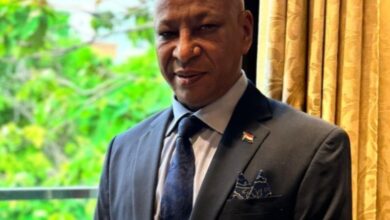
The Face of Truth | Dr. Ibrahim Shaglawi Haroun’s Arrest: The Calculations of Security and Politics

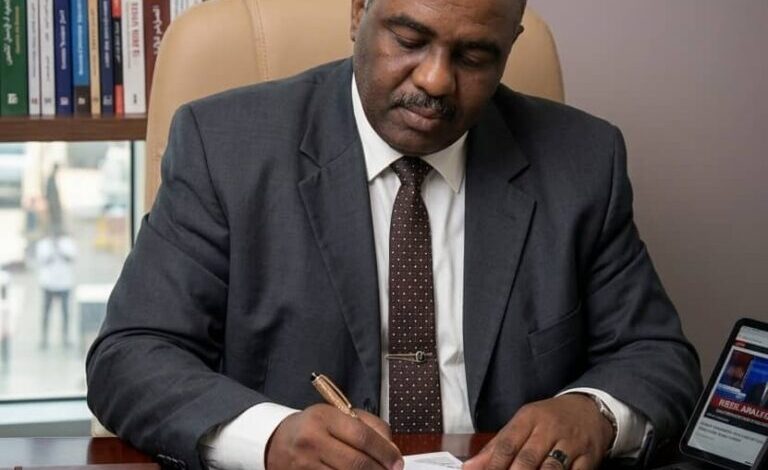
In politics, it is not enough to know who has been arrested; what matters more is understanding why they were arrested, what messages the measure carries, and who is using it to rearrange their cards. Therefore, the arrest of Ahmed Mohammed Haroun cannot be read as a security or legal measure isolated from political calculations. It is an event that goes beyond the individual detainee to encompass the nature of the existing balance of power, the relationship between the military leadership and the political forces supporting it, as well as the external pressures surrounding the Sudanese scene.
Timing is key to understanding the situation. Haroun’s arrest came following a media interview in which he discussed his party’s relationship with the army, describing it as support in confronting the rebellion rather than organizational subordination. He also criticized certain positions taken by the leadership and its susceptibility to external pressures. Thus, his appearance was not merely a return to the political scene; it revealed a degree of political and rhetorical independence that may have exceeded what some parties considered acceptable.


The sensitivity surrounding Haroun’s arrest stems from his legal background as a former judge and his understanding that an accusation does not constitute a conviction, and that accountability cannot be upheld outside the guarantees of justice. Since the fall of the Salvation regime in April 2019, he has remained in detention for years without being formally charged or brought to trial. The question here concerns the legality of his continued detention, the limits of legal procedures, his whereabouts, and the authority responsible for him. A state that calls for justice must be transparent in its procedures.
From a security perspective, the arrest may reflect an attempt to contain the activities of a political current with deep social roots and the capacity to mobilize and influence decision-making. In wartime, the state does not monitor positions alone; it also monitors centers of influence and networks of power operating outside its official channels. Haroun’s reappearance may have raised concerns about the resurgence of political influence that could prove difficult to contain. However, this remains an analytical possibility in the absence of any official clarification.
Politically, the arrest raises questions about the future of the relationship between the army and the Islamists. The war has created field-level coordination, but it has not settled the nature of their partnership once it ends. The leadership may need the capabilities of these groups in confronting the rebellion, but it does not necessarily want their contribution to evolve into independent influence within the structures of power. Thus, the significance of the arrest extends beyond Haroun himself to a broader and important question: Who has influence over decision-making, and who determines the limits of participation in post-war Sudan?
On the other hand, the arrest may generate tension within the camp supporting the army, given Haroun’s association with mobilizing youth groups in support of the army. These groups may view his detention as targeting their role or diminishing their influence. Here, the leadership’s ability to manage differences without turning them into conflict is put to the test. National cohesion is preserved not only through unity on the battlefield, but also through the effective management of political differences among the various components.
More significant still were the crowds that took to the streets in Atbara, Shendi, and El Obeid, demanding Haroun’s release. This revealed the National Congress Party’s ability to mobilize its grassroots supporters and restore its presence in the streets. This places the authorities before a more complex equation. Continued ambiguity surrounding his whereabouts and the legality of his detention could turn the arrest into an issue of political and popular mobilization, moving it from the security sphere into the arena of political contention. This could make the decision to contain the situation a gateway to expanding the crisis rather than resolving it.
External calculations also come into focus here. Washington’s renewed reminders, through statements by Massad Boulos, of the sanctions imposed on Haroun and their linkage to the Islamist file raise the question of whether the arrest carries a message of reassurance to capitals pressing for their exclusion from the political scene, or reflects an attempt to accommodate their demands. However, the absence of evidence of direct pressure makes this coincidence an indication of the intersection between national calculations and international pressures, rather than proof of a direct connection.
Political calculations should not obscure the requirements of the law. Haroun’s detention without a legal basis lacks legitimacy, and the accusations of the International Criminal Court, regardless of the controversy surrounding them, do not constitute grounds for detaining him domestically. Justice does not mean suspending rights, and an accusation cannot substitute for a legal basis. Consequently, his release, in the absence of such a legal basis, is a legal entitlement that must not be denied.
From the perspective of #The_Face_of_Truth, Haroun’s arrest may have been an attempt to contain political influence, a message to the outside world, or a measure dictated by security assessments. However, the crowds that took to the streets afterward introduced a variable that may not have been factored into the decision, or whose impact may not have been sufficiently assessed: the organization’s return to the streets, the emergence of competition over the legitimacy of its leadership, and the opening of debate over the limits of the relationship between the army and the forces that supported it. The important question therefore remains: What equation is being shaped behind this man’s arrest? A state fighting an existential war needs to manage its internal balances wisely, not manufacture rivalries. The greatest danger would be for an external battle to end in an internal conflict over who holds the keys to the future.
May you remain well and in good health.
Sunday, November 22, 2026
Shglawi55@gmail.com