Environmental and Health Effects of War Remains on Returnees to Khartoum After Displacement
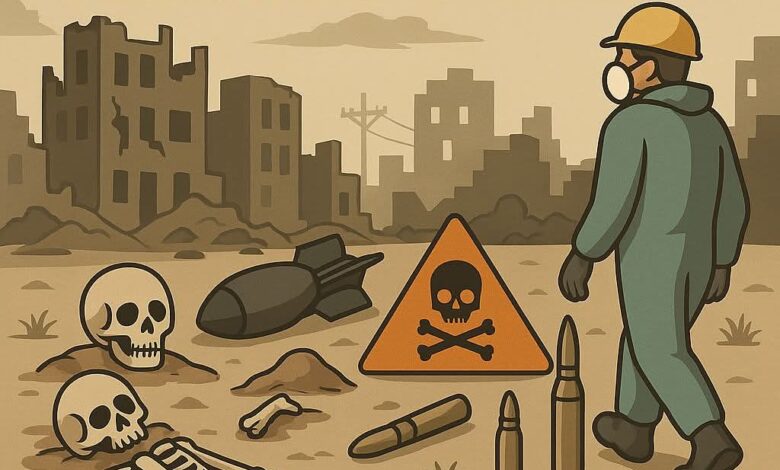
في أعقاب الحروب والنزاعات، تُواجه المجتمعات المتأثرة تحديات بيئية وصحية خطيرة
In the aftermath of wars and conflicts, affected communities face serious environmental and health challenges
نتيجة تراكُم بقايا الجثث البشرية وأطراف الآدميين وبقايا الأسلحة والذخائر.
Due to the accumulation of human remains, dismembered body parts, and remnants of weapons and munitions.
هذه المخلفات تُشكّل تهديدًا مباشرًا ليس فقط لصحة الإنسان،
These remnants pose a direct threat not only to human health,
بل أيضًا للموارد البيئية مثل المياه والتربة والهواء،
But also to environmental resources such as water, soil, and air,
خصوصًا في المناطق التي تفتقر إلى أنظمة دفن أو تطهير صحية.
Especially in areas lacking proper burial or sanitation systems.
أولاً: التأثيرات البيئية والصحية لبقايا الجثث البشرية
First: Environmental and Health Effects of Human Remains
1. التحلل البيولوجي وإفراز السوائل الجثثية
1. Biological Decomposition and Release of Cadaveric Fluids
تتحلل الجثث في غضون أيام إلى أسابيع بحسب درجة الحرارة والرطوبة،
Corpses decompose within days to weeks depending on temperature and humidity,
وتُفرز سوائل تحتوي على بكتيريا ضارة مثل الإيشيريشيا كولاي (E. coli)، السالمونيلا، والكلوستريديوم.
Releasing fluids that contain harmful bacteria such as Escherichia coli (E. coli), Salmonella, and Clostridium.
هذه السوائل قد تتسرب إلى مصادر المياه الجوفية أو السطحية، ملوثةً إياها.
These fluids may seep into groundwater or surface water sources, contaminating them.
تنتج عن التحلل روائح كريهة وغازات سامة مثل الأمونيا وكبريتيد الهيدروجين،
Decomposition produces foul odors and toxic gases such as ammonia and hydrogen sulfide,
ما يؤثر على جودة الهواء ويُسبب أمراضًا تنفسية.
Which affect air quality and cause respiratory diseases.
> المصدر: WHO – Management of Dead Bodies
Source: WHO – Management of Dead Bodies
2. نقل الأمراض المعدية
2. Transmission of Infectious Diseases
في العادة لا تكون الجثث معدية بعد الوفاة،
Generally, corpses are not contagious after death,
إلا إذا كان المتوفى مصابًا بأمراض وبائية مثل الكوليرا، الإيبولا، أو الطاعون.
Unless the deceased died of epidemic diseases such as cholera, Ebola, or plague.
تنتقل العدوى للناس العاملين في دفن الجثث أو القاطنين بجوار المناطق المتأثرة
Infections can spread to burial workers or nearby residents
من خلال الجروح أو استنشاق الغبار الملوث.
Through open wounds or inhalation of contaminated dust.
> المصدر: ICRC – Disease Risk from Dead Bodies
Source: ICRC – Disease Risk from Dead Bodies
ثانيًا: بقايا الحروب (الذخائر، المعادن الثقيلة، شظايا الأسلحة)
Second: War Remnants (Munitions, Heavy Metals, Weapon Fragments)
1. التلوث بالمعادن الثقيلة
1. Heavy Metal Pollution
تحتوي بقايا الأسلحة على معادن مثل الرصاص، الكادميوم، الزئبق، واليورانيوم المنضب.
Remnants of weapons contain metals such as lead, cadmium, mercury, and depleted uranium.
هذه المواد تتسرب إلى التربة والمياه مسببة أمراضًا خطيرة مثل السرطان، والفشل الكلوي،
These substances seep into soil and water, causing serious diseases such as cancer, kidney failure,
وتأخر النمو العقلي عند الأطفال.
And developmental delays in children.
> المصدر: UNEP – Post-Conflict Environmental Assessment
Source: UNEP – Post-Conflict Environmental Assessment
2. الذخائر غير المنفجرة (UXOs)
2. Unexploded Ordnance (UXOs)
تشكل خطرًا دائمًا عبر التفجير المفاجئ أو التسرب الكيميائي.
They pose a constant threat through sudden detonation or chemical leakage.
تؤدي لإصابات خطيرة وبتر أطراف أو الوفاة،
They lead to severe injuries, amputations, or death,
لا سيما بين الأطفال والعاملين في التنظيف أو الزراعة.
Especially among children and those working in cleanup or agriculture.
> المصدر: Landmine & Cluster Munition Monitor
Source: Landmine & Cluster Munition Monitor
ثالثًا: بقايا الأطراف البشرية المنتشرة بسبب الانفجارات
Third: Scattered Human Limbs from Explosions
تُسبب هذه البقايا تلوثًا بصريًا ونفسيًا شديدًا،
These remains cause severe visual and psychological pollution,
كما أنها قد تجذب الكلاب الضالة والطيور المفترسة، ما يزيد من خطر انتشار الأمراض.
And may attract stray dogs and scavenging birds, increasing the risk of disease transmission.
تحللها في الهواء الطلق يؤدي إلى انتشار البكتيريا والفيروسات في الجو والتربة.
Their open-air decomposition contributes to the spread of bacteria and viruses in air and soil.
> المصدر: CDC – Mass Fatality Management
Source: CDC – Mass Fatality Management
التوصيات البيئية والإنسانية
Environmental and Humanitarian Recommendations
1. التعامل السريع مع الجثث عبر دفنها بطريقة صحية وآمنة وفقًا للمعايير الدولية.
2. Prompt and safe burial of corpses in accordance with international standards.
3. حصر الذخائر غير المنفجرة ووضع إشارات واضحة وتحذيرية في أماكن تواجدها.
4. Identification and clear marking of unexploded ordnance locations with warnings.
5. إجراء تقييم بيئي شامل قبل إعادة توطين السكان في المناطق المتأثرة.
6. Conduct comprehensive environmental assessments before resettling populations in affected areas.
7. توفير معدات الحماية الشخصية للفرق العاملة في التنظيف والتطهير.
8. Provide personal protective equipment to all cleanup and decontamination teams.
9. التعاون مع منظمات دولية مثل الصليب الأحمر وبرنامج الأمم المتحدة للبيئة UNEP لتطبيق بروتوكولات السلامة.
10. Collaborate with international organizations like the Red Cross and UNEP to implement safety protocols.
ملاحق إضافية: فيروس الهانتا في الخرطوم
Appendix: Hantavirus in Khartoum
مصدر العدوى:
Mode of Transmission:
ينتقل فيروس الهانتا عبر استنشاق جزيئات الغبار الملوثة ببول أو فضلات الفئران والزواحف الجافة.
Hantavirus is transmitted through inhaling dust particles contaminated with the dried urine or droppings of rodents and reptiles.
الأعراض:
Symptoms:
صداع، آلام عضلية، سعال، احتقان، حمى نزفية، فشل كلوي، ونسبة وفاة تصل إلى 15%.
Headache, muscle pain, cough, chest congestion, hemorrhagic fever, kidney failure, and a mortality rate of up to 15%.
إجراءات الوقاية:
Preventive Measures:
ارتداء كمامات N95 وقفازات.
Wear N95 masks and gloves.
عدم استخدام المقشات أو نفض الأثاث الجاف.
Avoid using brooms or shaking dry furniture.
رش الأرضيات بماء ممزوج بمطهر مثل الديتول أو الكلور.
Spray floors with water mixed with disinfectants such as Dettol or bleach.
سحب الأوساخ بممسحة وليس بالمكانس الجافة.
Remove dirt using a mop, not dry vacuumi
> المصدر: CDCHantavirus Prevention
Source: CDC – Hantavirus Prevention
يُوصى بتحويل هذا المحتوى إلى دليل توعوي وطباعته أو نشره رقميًا ضمن حملات التوعية البيئية في مناطق النزاع ما بعد الحرب، في السودان.
It is recommended that this content be converted into an awareness guide and published in print or digital form as part of environmental awareness campaigns in post-conflict areas in Sudan.
الفريق الدبلوماسي – Diplomatic Team
الرؤية الدبلوماسية – Diplomatic Vision