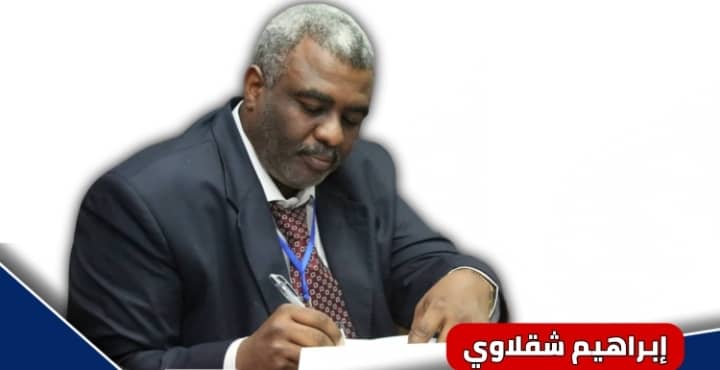
The Truth Perspective | Ibrahim Shglawi
Refugees and the Breach of National Security


The refugee issue in Sudan is currently one of the most sensitive and complex files, due to its security implications, social dimensions, and political challenges—particularly after the outbreak of war on April 15, 2023. This conflict triggered unprecedented waves of internal and external displacement, exposing the fragility of the state’s capacity to manage the crisis and reviving serious questions about sovereignty and national identity.
Since the war began, local reports have documented the involvement of foreign nationals from neighboring countries fighting alongside the Rapid Support Forces (RSF). This has raised serious concerns about the potential exploitation of refugee status to infiltrate Sudan’s national security. These concerns are heightened by porous borders and the lack of effective monitoring of refugee movements, especially in states like Khartoum and White Nile, which have become major hubs for refugee concentrations.
In this context, the Khartoum State government’s decision to relocate refugees outside the capital has been seen as an attempt to contain the threat. This was confirmed by Sadiq Hassan Farini, Acting Director General of the Ministry of Social Development in the state, who stated that the current emergency necessitated a realignment of security and social priorities.
Perhaps the most alarming development is the attempt to enforce policies of refugee integration at a time when the country is suffering from a legislative and institutional vacuum. An article published in Sawt al-Sudan revealed a preliminary agreement to endorse the so-called “Global Compact on Refugees and Migration,” an agreement that Sudan had long resisted due to its potential impact on national demographics and resources.
This agreement, which grants refugees expanded rights such as freedom of movement, ownership, access to government services, and even naturalization, is viewed by many observers as a breach of national sovereignty and an effort to re-engineer Sudanese society demographically. More critically, these steps are being taken without parliamentary oversight or legal mandate, amid the absence of transitional governance institutions.
In White Nile State alone, which hosts over 500,000 refugees, local communities suffer from severe shortages in basic services—from education and healthcare to dilapidated infrastructure. The state’s governor, Lt. Gen. Qamar al-Din Fadl al-Mawla, voiced these concerns during a recent meeting with a delegation from the UNHCR, calling for a greater international role to ease the burden on host communities.
This stance reflects a belated realization of the immense pressure Sudan faces as a host country, particularly in the face of dwindling international support for refugee issues. A bitter irony arises when comparing Sudan’s treatment of refugees from neighboring countries to how those countries treat Sudanese refugees.
In Egypt, Chad, and Ethiopia, Sudanese refugees are subject to strict regulations, including residency fees and restricted movement. In contrast, Sudan offers open entry with little oversight, and even engages in negotiations over refugee integration, often without due consideration of the national security and social consequences.
Criticism of Sudan’s Commission for Refugees and the UNHCR has grown significantly, with local media accusing the Commissioner for Refugees, Mr. Musa Ali Atroun, of facilitating agreements without legal authorization. Amid a lack of transparency and accountability, the UNHCR has continued coordinating and implementing policies without genuine oversight from the transitional government or the Sovereignty Council.
What is urgently needed from the upcoming “Hope Government” is the formulation of a clear and comprehensive national policy on refugees. Such a policy must ensure that any agreements with international organizations receive formal legislative approval and are publicly disclosed. It must also reassess the unregulated foreign presence, activate systems for registration, monitoring, and classification, and protect host communities from excessive burdens. Furthermore, it must safeguard Sudan’s national and demographic identity from any form of forced integration.
There are also valuable regional models to learn from. Lebanon, for instance, which hosts over 1.5 million Syrian refugees, has consistently rejected any form of naturalization or permanent settlement, maintaining voluntary repatriation as the only acceptable solution, despite UN pressure (UNHCR Lebanon Reports 2023). Ethiopia, meanwhile, adopted a more flexible approach under its 2019 Refugee Proclamation, allowing freedom of movement and employment, but stopping short of granting political or property rights.
These examples illustrate that international law does not compel states to integrate refugees or grant them citizenship. Rather, it establishes a minimum threshold of obligations: non-refoulement, protection, and the provision of essential services, as outlined in the 1951 Refugee Convention and UNHCR principles. Integration and naturalization, however, remain sovereign decisions based on national interests.
From the lens of #TheTruthPerspective, the refugee file is a true test of Sudan’s ability to protect its national security without compromising its humanitarian commitments. It is a file that leaves no room for political appeasement or short-term calculations—because the real threat may not only come from beyond the borders, but from what is being imposed within under the guise of humanitarian work.
Will the “Hope Government” rise to this challenge? Or will this file, like many others, remain open and unresolved—an ever-growing burden on Sudan’s future and national stability?
Wishing you peace and wellness
Wednesday, July 9, 2025
📩 Shglawi55@gmail.com