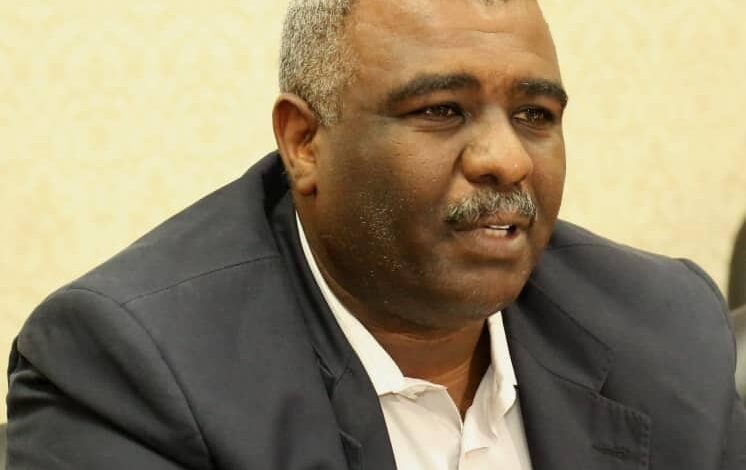
The Face of Truth | Ibrahim Shglawi
Khartoum… Incentives Await Returnees


Khartoum is living through one of the most complex moments in its modern history, after the war that left the capital fragmented and regressing, following waves of mass displacement of citizens, widespread destruction of infrastructure, and an almost complete collapse of essential services.
This reality poses an existential challenge to the entire city: How can Khartoum return to life? And how can people return to their homes amid ongoing security and economic fragility that still casts a shadow over every detail?
Alongside the manifestations of destruction, there is disintegration affecting state institutions, in addition to weak trust among the components of society, and the absence of a unifying national project for Sudanese people. Khartoum today is a stricken capital in need of rebuilding trust and a new social contract that redefines the relationship between citizen and state and lays the foundation for a different phase in thinking and practice. Restoring security, despite its importance, is not enough on its own—there must be a comprehensive project to rebuild both people and institutions.
Amid this complex reality, signs of hope have begun to appear on the horizon. The new government, led by Dr. Kamal El-Din Idris, is attempting to provide practical answers to long-postponed questions, through launching a series of incentives and initiatives aimed at encouraging voluntary return of residents and preparing the city once again for life.
Steps have already begun through the Reconstruction Committee by restoring electricity in parts of the capital, especially in vital stations and residential neighborhoods, as well as repairing water stations and rehabilitating hospitals, medical centers, universities, and the airport. These measures represent a beginning and a first step on the path to rebuilding trust and restoring civilian life.
The Hope Government, led by Dr. Kamal El-Din Idris, seems aware of this challenge and is trying to shift from crisis management to leading a reconstruction project, through a package of policies aimed at restoring trust between the state and the citizen, and creating a climate conducive to people’s return.
Yesterday, the Prime Minister met with the Director General of the “Silaati” Company, Nabras Hussein, to discuss the company’s role in providing basic goods for returnees. He directed the acceleration of implementation as part of the “Hope” program launched by the government to alleviate the cost of living and prepare the conditions for a dignified return.
Dr. Azza Idris, the wife of the Prime Minister, also had a notable presence through her visit to Osman Digna Hospital and the Children’s Hospital, where she met with medical staff and affirmed her commitment to improving medical services, especially concerning children and primary healthcare.
Meanwhile, Khartoum State Governor Ahmed Othman Hamza continues to receive citizens returning from Cairo, within a program funded by the Defense Industries Corporation. On the other hand, the government is responsible for organizing the return of arrivals via sea and air crossings, continuing its commitment to receiving returnees from the Sultanate of Oman and the Kingdom of Saudi Arabia.
Amid these movements, proposals emerged calling for Prime Minister Dr. Kamal El-Din Idris and his wife Dr. Azza Idris to personally receive the returning groups by air and sea. This would be a symbolic gesture with national significance, reflecting the state’s keenness to restore the bond between government, citizen, and homeland.
Despite all it has suffered, Khartoum still possesses the elements of revival. Its geographic location makes it central to North, Central, and East Africa, and its vast natural resources provide a solid base for any development project. Additionally, the youth population still believes in the possibility of change and progress. However, these potentials have been idle for decades due to the lack of political will, unified vision, rampant elite conflicts, and institutional instability.
From this perspective, the Rwandan experience appears to be an inspiring example worth examining. A country that emerged from one of the worst massacres in modern history, yet managed within a few years to become an African success story in the fields of education, innovation, and governance.
Rwanda relied on strong political will, a clear national project, and invested in people before infrastructure. The Kigali Innovation City experience, now known as the African Silicon Valley, affirms that emerging from catastrophe is not impossible for those who have the vision and will.
This model is not out of reach for Sudan, which possesses the elements to make Khartoum a launching point for a true national project. But this requires a shift in thinking and a qualitative leap in management style—one based on partnership, not guardianship, and on sound planning.
As challenges continue, progress remains fragile and subject to regression unless supported by an attractive, long-term strategic plan.
According to #Face_of_Truth, these incentives launched by the government are the beginning of a broader project. If placed within an integrated national vision for revival, and if the government can transform these initiatives into practical reality beyond slogans, then Khartoum will indeed begin to reclaim its role as a vibrant capital, and Sudan will take a genuine step toward recovery and reconstruction.
Wishing you well and in good health.
Monday, August 18, 2025
Shglawi55@gmail.com
#KhartoumRises
#ReturnToHomeland
#HopeGovernment
#RebuildKhartoum
#SudanRecovery
#KamalIdris
#HopeProgram
#FaceOfTruth
#VoluntaryReturn
#SudanNow
#IbrahimShglawi