Face of Truth | Ibrahim Shglawi
The UN Summit: From Commitments to International Partnership
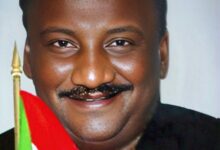
Next week, First Lieutenant General Abdel Fattah Al-Burhan, President of the Sovereignty Council and Commander of the Army, will head to New York to participate in the 80th session of the United Nations General Assembly, in a visit that differs in form and substance from previous ones, and lays the foundation for a new phase in the relationship between Sudan and the international community.
If last year’s visit came to affirm the legitimacy of the state in the face of attempts to undermine it by the rebel militia and its supporters, and amid ambiguous positions from regional and international parties, foremost among them the African Union, then this year’s visit comes from a completely different position: that of the victor, politically and militarily, who succeeded in thwarting the most dangerous conspiracy to dismantle the Sudanese state.
Al-Burhan goes to the United Nations this time not in search of “legitimacy,” as he has already consolidated it militarily by defeating the militia and its backers, politically through his adherence to a clear national path, and popularly through the return of life, services, and security to the liberated states, foremost among them the capital Khartoum, where the General Command of the Army, the Republican Palace, and the oil refinery stand as witnesses to the cohesion of the state and the restoration of its sovereignty.
In this visit, Al-Burhan returns to the United Nations platform to fulfill the commitments he made before the international community in September 2024, when he presented a clear roadmap for resolving the crisis, which included the formation of a national technocratic government, amendment of the constitutional document, and a comprehensive Sudanese dialogue leading to free and fair legislative elections. Today, he returns having already implemented those steps, foremost among them the appointment of Dr. Kamal Idris as Prime Minister, and the launch of its first meetings last week.
The amendment to the 2025 Constitutional Document was also approved, forming the governing framework for the new transitional period, which extends for three years. This step strengthens the legal and political legitimacy of the current authority and lays the foundation for a genuine transition based on national will, not foreign dictates.
What also distinguishes this visit is its high-level composition, as Al-Burhan is accompanied by prominent figures that clearly reflect a shift in the Sudanese approach to dealing with the world, including Dr. Kamal Idris, a figure of significant stature in international circles, known for his broad connections and long-standing experience within the corridors of the United Nations.
He is expected to lead bilateral discussions with government leaders and international organizations, relying on constitutional and popular legitimacy and a political vision emerging from the hope of reconstruction and national dialogue. The joint participation of the President and the Prime Minister in one delegation is a notable precedent, reflecting state cohesion, institutional harmony, and unity of stance, alongside the Foreign Minister, the Director of Intelligence, and possibly the Attorney General.
Perhaps the most significant aspect of this visit is the shift in the nature of Sudanese discourse: from a defensive tone denouncing the rebellion to an offensive tone demanding the classification of the rebel militia as a terrorist group, holding its local and regional supporters accountable for the violations, displacement, and destruction of state institutions.
Khartoum clearly sees that the international leniency in describing what happened has encouraged the prolongation of the war and weakened the response to international resolutions such as Resolution 2736 issued by the Security Council, which demanded that the Rapid Support Forces lift the siege of El Fasher and withdraw fighters threatening the safety and security of civilians.
Sudan’s message this year is clearer: Sudan does not accept bargaining over its unity, nor does it accept the imposition of a new reality outside of legitimate institutions. There can be no talk of peace without holding accountable those involved in funding, directing, and supporting the war machine against Sudanese citizens.
The Sudanese crisis cannot be understood in isolation from its regional and international dimensions; Sudan’s strategic location on the Red Sea makes it a hub for maritime security and a stage for intersecting interests of regional and international powers. The continuation of the conflict and the weakening of the country opens the door for extremist groups and organized crime networks to fill the security vacuum, threatening the stability of the entire region.
At the same time, the humanitarian situation and the crisis of displacement and asylum increase the risk of Sudan becoming a major source of irregular migration to Europe, which requires a joint security and political response linking the stability of Africa to the security of Sudan and the Mediterranean countries.
Therefore, the international community must reshape its stance on the crisis by clearly distinguishing between the state and its adversaries, between those seeking to rebuild Sudan and those exploiting its crisis for foreign agendas. Middle-ground solutions between the state and the militia do not create peace but reproduce war.
Sudan affirms, through its national will and the path of civil transition led by Dr. Kamal Idris, that political transition and peace can only be achieved through the restoration of sovereignty and the dismantling of militias.
According to #Face_of_Truth, the visit to fulfill commitments and strengthen international partnerships is an expression of a state project seeking to regain its position among nations and secure a place within the map of regional and international balances — from a position of actor, not victim. It is a message to the entire world that Sudan is not asking for charity, but is seeking a fair partnership that preserves its security and stability and enhances collective security in the Red Sea, Africa, and the world.
Wishing you wellness and good health.
Thursday, 11 September 2025
Shglawi55@gmail.com