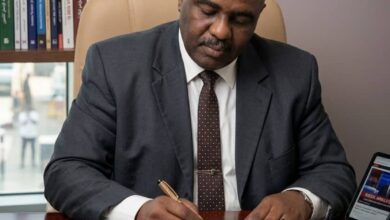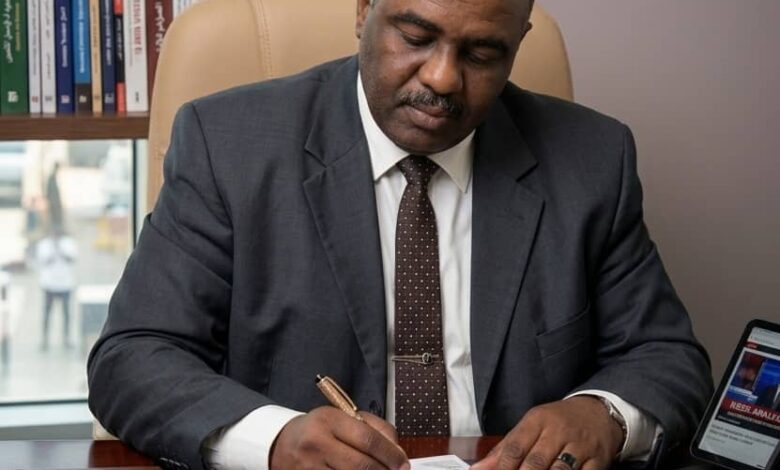
The participation of the Chairman of the Transitional Sovereignty Council, General Abdel Fattah Al-Burhan, in the 31st Conference of the Parties (COP31) in the Turkish city of Antalya carries particular significance in light of the realities of war facing our country. He presented the international community with a contradiction worth noting: Sudan is among the countries contributing the least to global emissions, yet it is among those most exposed to the consequences of climate change, including drought, floods, desertification, water scarcity, and declining agricultural and livestock production.
This is because climate change has become one of the major tests of states’ ability to protect their national security, economies, and the future of their generations. In the context of war, the importance of this challenge is magnified, because we are talking about an agricultural and pastoral country, where the stability of large segments of the population is linked to rainfall, water, and pastures, and is directly affected by any climatic disturbances or disruptions in the hydrological cycle of river resources.


Indeed, 2026 has provided evidence that makes it impossible to treat these risks as distant possibilities. In September, a report by the Food and Agriculture Organization indicated that rainfall during the June–September season was below average in most production areas. The states of Sennar and Gedaref recorded rainfall deficits of approximately 20% and 30%, respectively, while large areas of cultivated land were exposed to drought stress. The Famine Early Warning Systems Network also detected irregular rainfall distribution and delayed onset, affecting crop growth and pasture regeneration.
The situation becomes even more serious with the intensification of the El Niño phenomenon, which is associated with rising temperatures in the waters of the tropical Pacific Ocean and the resulting changes in global rainfall and temperature patterns. The World Meteorological Organization has warned that the phenomenon is expected to continue until at least February 2027, with the possibility of further intensification.
In Sudan, these effects intersect with the war, the shortage of agricultural inputs, and disruptions to supply chains, placing food production under multiple pressures. Here, we should not reduce the crisis to a single climatic phenomenon; rather, we must understand how natural fluctuations interact with economic fragility and the government’s limited preparedness.
The issue goes beyond declining crop yields or a disrupted agricultural season. Drought means declining water resources and vegetation cover, while the deterioration of pastures forces livestock to move in search of new resources, potentially increasing competition and friction between communities. Declining production also affects food prices, incomes, and employment opportunities, gradually transforming climate risks into economic, social, and security challenges.
Therefore, Sudan’s challenge is not to wait for a better season, but to build national capacity for adaptation. This begins with developing early warning systems, expanding water harvesting, rehabilitating irrigation projects, developing seeds resistant to drought and heat, protecting pastures and pastoral routes, and restoring vegetation cover. Solar energy should also be integrated into the operation of irrigation projects and productive services, reducing costs and strengthening communities’ resilience.
From the perspective of development communication, there is a parallel battle no less important than providing funding and agricultural technologies: the battle for knowledge and awareness. Climate forecasts that remain confined to technical reports neither protect a farmer nor save a herd.
What is therefore required is a development communication system that connects meteorological services with agricultural extension and local media, transforming scientific information into practical messages delivered to farmers and pastoralists in their own languages and through their preferred channels. Such messages should help them make early decisions concerning farming, water management, and livestock movements. Media, in this context, is an essential partner in risk management and building communities’ capacity to respond.
Al-Burhan’s address was right to link climate adaptation with peace, food security, and water security, and to call for fair and accessible financing for developing countries. However, no matter how substantial international funding may be, it will not bring about transformation unless matched by national preparedness, implementable projects, and institutions capable of coordination and follow-up. Furthermore, as the country is rebuilt, we must avoid reproducing outdated development models that ignore climate change.
Our country possesses vast agricultural lands, water resources, livestock wealth, and human potential that qualify it to contribute to regional food security. However, the value of these resources depends on our ability to manage them with an alert and forward-looking mindset that understands the challenges of the future.
Therefore, confronting climate change is an integrated national responsibility. The government formulates policies and protects resources; development media transforms knowledge into awareness and behaviour; organizations guide communities; universities direct scientific research towards local solutions; and the private sector invests in sustainable technology.
Citizens, too, remain part of the solution. Cutting down trees and removing vegetation harm the environment and accelerate desertification. Protecting the land begins with a simple act of awareness, through which every individual recognizes that preserving trees and water is everyone’s responsibility.
From the perspective of #Face_of_Truth, the Antalya address should not end with the conclusion of the conference. Rather, it should evolve into a national project that connects climate, development, and security. Protecting land, water, and production, and delivering knowledge to farmers and pastoralists, are no longer merely development options, but conditions for the survival and advancement of the state.
Wishing you continued health and well-being.
Thursday, 12 November 2026
Shglawi55@gmail.com