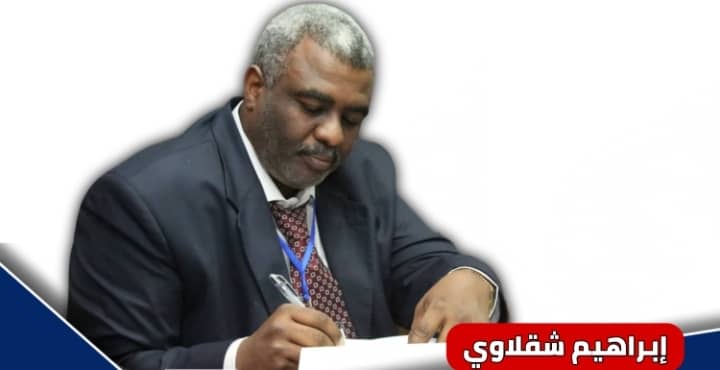
Face of Truth | Ibrahim Shglawi
Sudan and the Domino Shifts in the Region


Amid the military escalation between Iran and Israel, the phenomenon of the “domino game” becomes evident in the Middle East—a series of sequential events, each influencing the other in a cascading manner. Although the confrontation between Tehran and Tel Aviv remains geographically limited for now, its repercussions extend beyond borders, affecting the entire region, especially countries located along lines of influence or serving as transit zones.
In this context, this article seeks to explore how military calculations intersect with Sudan’s strategic interests amid these developments, and the potential emergence of a new phase of regional instability. It also offers insight into Sudan’s possible moves to close the chapter on war.
Despite the currently limited scope of the Iran-Israel confrontation, its reverberations are likely to reach most countries in the region, particularly Lebanon, Syria, Iraq, Yemen, and possibly even the UAE. This landscape threatens to reshape the map of alliances and imposes new security arrangements in traditional spheres of influence.
Sudan, for its part, is not immune to these developments. The impact of this conflict may manifest on three main levels:
First: Economically – Oil market disruptions and tensions in Red Sea shipping lanes are likely to deepen pressures on Sudan’s already strained economy, weakened further by ongoing war. It may become necessary to seriously consider alternative maritime outlets, drawing on past experiences such as in 2021 when the Sudanese government resorted to using Egypt’s Ain Sokhna and Alexandria ports due to container congestion at Port Sudan.
Second: Politically – The internal political scene may be affected as some regional allies of the Rapid Support Forces militia become preoccupied with the broader confrontation, potentially weakening the political and logistical support provided to the militia. This could prompt local allied forces to reassess their positions in favor of political stability and repositioning.
Third: Security-wise – Fears are rising that the Red Sea may turn into a conflict zone amid regional competition over vital ports and the Bab al-Mandab Strait. Sudan’s location along a strategic coastline places it in a sensitive position, possibly prompting it to adopt political stances that safeguard its higher national interests in an increasingly volatile environment.
In a related context, recent military movements by Field Marshal Khalifa Haftar’s forces in the border triangle between Sudan, Egypt, and Libya cannot be overlooked. The Sudanese army responded with deterrent measures that may be interpreted as part of efforts to assert indirect influence over an area known for arms and fighter trafficking—or as political and security messages to regional actors that eastern Libya will not remain isolated from the dynamics unfolding in Sudan. How can these transformations be interpreted in light of the hypothesis of ending the war in Sudan?
There are two possible approaches to answering this:
First: Cautious Optimism – The regional backers of the militia becoming preoccupied could reduce foreign intervention, giving the Sudanese army a strategic opportunity to accelerate military operations and regain control over the entire national territory. This is especially true in light of the absence of the diplomatic and logistical cover that previously enabled the militia to sustain the conflict. This regional shift could offer a golden chance to curb the influence of the rebellion—if Sudan plays its cards right.
Second: Coercive Escalation – Conversely, some local actors allied with the militia may exploit the regional war’s fallout to inflame the domestic situation by threatening to capitalize on potential crises in supplies and services, in an attempt to impose a new status quo. This scenario threatens to create manufactured internal chaos, requiring vigilance from national forces keen on the country’s security and stability.
On the other hand, are there regional moves toward peace? Recent reports speak of quiet Qatari and Turkish initiatives to revive the peace process in Sudan, reminiscent of Qatar’s previous role in Darfur. While such efforts may contribute to creating a necessary political balance, building the Sudanese state at this stage requires a rational approach to power dynamics and statehood—carefully balancing external openness with the protection of national decision-making, far from isolation or ideological rhetoric.
In light of this tense regional scene, and amid rapid military and political developments, the opportunity seems ripe—according to what is revealed by the #Face_of_Truth—to push toward restoring peace in Sudan through a combination of decisive military action and political engagement. However, this requires strong internal will and serious international effort. There is no doubt that Sudan, due to its geopolitical position, remains at the heart of regional balances, necessitating a deep understanding and precise knowledge of power trajectories to ensure its lasting security and peace.
Wishing you wellness and good health.
Sunday, June 15, 2025
Shglawi55@gmail.com