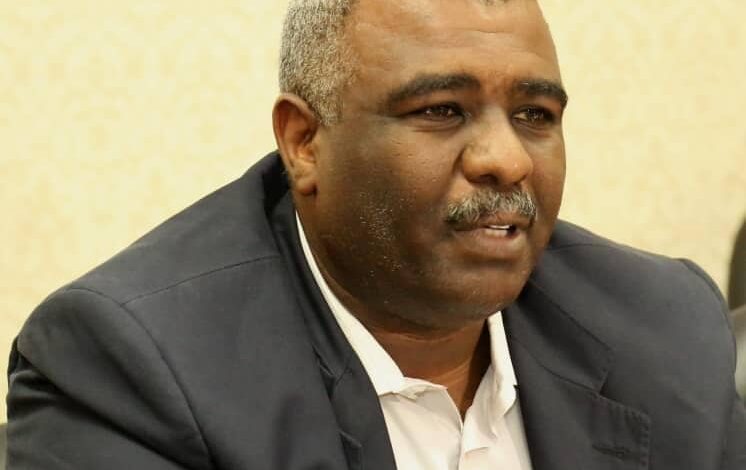
Face of Truth | Ibrahim Shaqlawi
Sudan and Egypt: Partnership for Food Security


In March 2015, during the Arab Economic Summit in Sharm El Sheikh, Sudan presented a comprehensive initiative to enhance Arab food security. This initiative was based on a strategic vision prepared by a team of experts after months of preparation and technical workshops involving the Ministries of Irrigation, Agriculture, Finance, and Investment. At that time, the initiative represented a serious signal of Sudan’s great potential in this vital field.
The step was supported by a study commissioned by the Arab Fund for Economic and Social Development to a specialized German company to estimate the size of the food gap in the Arab world and Sudan’s potential role in bridging it. However, despite the study’s completion, practical follow-up was absent, raising questions about the mechanisms of joint Arab action and its ability to invest the available resources considering Sudan’s situation.
Nevertheless, in recent years, practical initiatives have emerged within Sudan to face increasing challenges, including the SASAS program to improve drought-resistant maize production, the Innovation Studio for Resilience (ISR) initiative supported internationally to enhance local solutions, in addition to the Strategic Policy Support program led by IFPRI, which provided accurate data for decision-makers.
These efforts reflect a practical approach by local, regional, and international actors to establish Sudan’s position as a reliable source for Arab food security.
The agricultural integration between Sudan and Egypt goes beyond bilateral cooperation; it represents part of a broader regional vision to achieve sustainable food security in the Nile Basin and the Arab world. Sudan, with its fertile lands and water resources, is the strategic depth for Egyptian and Arab food security, while Egypt possesses long-standing expertise in agricultural reform and developmental planning.
In a practical step met with optimism, Engineer Mahmoud Hindi, President of the Egyptian-Sudanese Businessmen Association, recently announced Sudan’s allocation of one hundred acres on the Nile banks for major agricultural projects with technical and financial support from Egypt and international organizations such as the FAO.
The Minister of Agriculture of Nile River State, Salah Ali Mohamed, also confirmed the launch of a rice cultivation project on 120 acres in Atbara, funded by the FAO and the Technology Transfer Fund, praising rice’s ability to diversify food and enhance food security.
These steps reflect an integrative policy between Sudan and Egypt that employs natural resources and shared expertise in favor of a sustainable agricultural renaissance focused on improving the productivity of small farmers and developing agricultural infrastructure, which enhances resource sustainability and multiplies economic returns.
Agricultural integration projects cannot be separated from the reality of the Nile Basin after the completion of the Renaissance Dam. Ethiopia has hydroelectric capacities that affect the regulation of water flows, while Sudan offers vast agricultural lands for multiple seasonal crops, and Egypt possesses strategic expertise in agricultural management and training.
If the three countries reach clear understandings, the Renaissance Dam can be transformed from a source of tension into an unprecedented regional cooperation opportunity based on an integrated system for managing water, energy, and land, which enhances food security and sustainable development and makes the Nile Basin a model of integration and stability.
These efforts come amid an Arab food bill exceeding 44 billion dollars annually and self-sufficiency rates in grains below 50%, with declining production due to desertification and climate change, according to the Arab Organization for Agricultural Development (AOAD). Economists believe that investing Sudanese agricultural resources, coupled with Egyptian expertise and Arab financial support, is the optimal path to reduce dependence on volatile global markets affected by conflicts and suffering from weak supply chains.
These trends contribute to achieving a set of goals that require enhancing political and administrative coordination among Nile Basin countries, alongside increasing investments in Sudan’s agricultural infrastructure, in addition to Arab and international financing for food security projects, designing joint training programs to transfer expertise and modern technologies, and implementing flexible agricultural policies that consider climate changes and are based on partnerships between governments, civil society, and research centers.
According to #Face_of_Truth, the agricultural cooperation witnessed today between Sudan and Egypt represents a possible transformation from bilateral cooperation to a strategic regional partnership, placing food security at the heart of development and stability in the Nile Basin and the Arab world. Thus, it provides a practical model for how to transform resources and challenges into opportunities that ensure a safer and more prosperous future for the region’s peoples.
Stay well and healthy.
Wednesday, September 3, 2025
Shglawi55@gmail.com