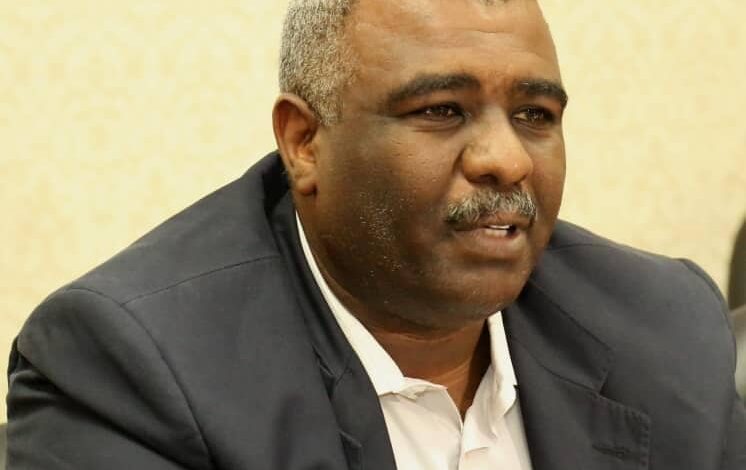
Face of Truth | Ibrahim Shglawi
The Fragility of the State — “Corruption”, Mr. President..!


After the country was pushed into an existential war
that destroyed infrastructure, displaced millions, and crushed the dignity of the Sudanese citizen under the rubble of displacement and lost hope, no one will accept—after all this heavy cost—that the fate of the state is more corruption or further encroachment of private interests at the expense of the sacrifices of the resilient people.
It is no longer acceptable, by any national or moral standard,
for state institutions to remain hostage to corruption, after the Sudanese have offered the lives of their sons in defense of the homeland, and endured all kinds of misery and hardship—not because they are unaware of their rights, but because they waited for their leaders to rise to the level of the historical moment and build a nation that reflects the price of these sacrifices.
The reality is that the talk about corruption is no longer confined
to the elite or limited to closed circles, but has become a daily topic in public gatherings, and is published in journalistic writings—many of which are based on documents or verified information obtained by journalists through investigative efforts or leaks from within high-level institutions. In all cases, such writings must not be treated with disregard or delay, as they fall squarely within professional and legal responsibility, especially in the presence of laws that regulate journalism and publishing and require documentation and credibility.
With the absence of a legislative authority that exercises oversight
and accountability, Sudanese journalism has come to bear this doubled burden, as it now plays a dual role: conveying the voice of the people, and monitoring the performance of the state, despite the known challenges it faces. However, this advanced role requires a high level of national awareness and attention to the danger of being dragged behind misinformation campaigns and rumors that may not be innocent, but part of a power struggle aimed at dismantling the internal front and spreading frustration and despair in the hearts of citizens.
From this standpoint, dealing with circulating
information and accusations must be done with a discerning eye that distinguishes between responsible criticism and attempts at entrapment and confusion, which some media platforms may exploit to transmit unverified narratives or settle political scores—posing a real threat to the stability and cohesion of the state.
To block these practices and begin
building a true state based on justice and transparency, it is necessary to expedite the establishment of the Anti-Corruption and Public Funds Recovery Commission, the institution stipulated in the amended Constitutional Document of 2025 in its Article (39). This commission represents the cornerstone for restoring citizens’ trust in governance institutions, and the responsibility for announcing its formation lies with the Prime Minister, Dr. Kamal Idris, immediately, and appointing its members in accordance with what the document stipulates.
This step is no longer a reform option among
a group of alternatives; rather, it has become a national necessity to save what remains of the state, and to send a clear message to the corrupt that the era of impunity is over. Delaying the formation of the commission may lead to the worsening of the crisis, while initiating its establishment, with real powers granted to it, will be the beginning of restoring the rule of law and achieving social justice.
The commission must be granted full authority to investigate
all raised allegations, distinguish the truthful from the fabricated, and hold those involved accountable—regardless of their positions or immunities—restoring the concept of the state and its institutions, and entrenching the principle of the rule of law over everyone, without exception.
The experiences of countries around us prove that there is no stability
nor development without genuine accountability and independent oversight institutions. Rwanda, which emerged from one of the most horrific tragedies in modern history, clearly chose the path of accountability and rejection of corruption, established an effective oversight structure, and within years transformed into one of the most stable and growing countries in the continent. In a different context, Morocco adopted deep institutional reforms that focused on judicial independence and enhancing transparency, enabling it to improve its ranking in integrity and investment indices.
These experiences confirm that the starting point must
be the serious and far-sighted confrontation of corruption. As for postponing this file under any pretext—whether security or political—it will be nothing but a repeated recipe for reproducing failure and collapse, perhaps in harsher and more complex forms.
Mr. President, according to #Face_of_Truth, no one is asking for the impossible. All that is hoped for is that the country be governed in broad daylight, and that state affairs be as clear and transparent as the sun—without concealment, deception, or erasure of sacrifices. Nor should it be allowed, in the name of freedom of expression or under the guise of open platforms, for media discourse to be used to weaken the state or spread fragility within its institutions. The coming phase cannot bear procrastination or evasion; we are either in front of a state of law and effective institutions, or we will be dragged again into the square of collapse.
Wishing you well and good health.
Sunday, August 7, 2025
Shglawi55@gmail.com