Face of Truth | Ibrahim Shaglawi
The International Grant for the Development of Rural Sudan
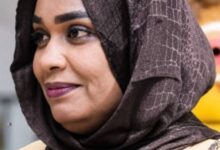

The statement by the Minister of Finance, Dr. Jibril Ibrahim, opens a window of hope in the Sudanese scene aspiring for advancement, when he announced last week the commencement of practical procedures to address Sudan’s arrears with the International Fund for Agricultural Development (IFAD), allowing the restoration of international funding allocated to small farmers and herders in the states.
This statement carries good news awaited by our people in the countryside. These indications reflect an increasing awareness within the government that rural development has become an existential priority related to national, economic, and social security at the same time.
The international grant promised by the Fund, valued at 47 million dollars, represents a clear international message that returning to the path of development support is possible if the Sudanese government meets the minimum requirements for institutional and financial stability.
However, this support cannot be separated from the political context that awaits us to overcome the bitterness despite the complex balances of the war, which requires transitional justice, confronting regional interventions, and strengthening the state system in many productive regions.
Therefore, rural development stands as a true national wager. Rural Sudan is no longer just a space for agricultural production but has turned into a battlefield between two projects: the project of the national state seeking stability, development, and advancement, and the project of armed chaos led by the Rapid Support Forces militia, which attempted a bloody coup on April 15, 2023, to seize power, supported by internal extensions and regional forces seeking to reshape the political map in our country.
This war did not stop at targeting the capital; it destroyed the production infrastructure in several Sudanese states, deprived thousands of families of their livelihoods, and removed hundreds of agricultural communities from the circle of economic development activity.
The war was practically a double coup: against state institutions and against the country’s ability to produce its food. The small projects in the countryside established by water harvesting projects, irrigation canals, agricultural roads, and cooperative societies all became direct victims of the battles, either through destruction, forced neglect in maintenance, looting, or displacement.
In light of this developmental disaster, linking rural development with projects becomes a political necessity to reestablish the state from the peripheries toward the center. Real political stability in Sudan cannot be imagined without enabling small producers in the countryside with the tools of survival and production—from land to financing, from services to infrastructure, to agricultural extension.
This can only be achieved through smart policies that we hope the Government of Hope will pursue, integrating social justice with balanced resource distribution, and linking financial reform efforts with a broader project to redefine the relationship between the state and the citizen in rural areas.
In addition to the challenges of war, rural Sudan also faces the effects of climate change, which has caused devastating droughts and recurring floods, destroyed crops, weakened livestock, and pushed many communities to the brink of collapse.
Yet, the potential remains latent if international funding is employed effectively and directed towards real productive projects instead of being wasted in bureaucracy or politicization. Rehabilitating irrigation networks, promoting sustainable agriculture, supporting rural women, and expanding distribution and storage networks are all essential inputs to convert external funding into productive energy that directly impacts people’s lives.
Therefore, the Government of Hope is required to go beyond the traditional executive role to a proactive performance that redefines development as a tool of resistance and transforms the countryside from a victim of conflict into a partner in building peace. Without this transformation, support and aid projects will remain in a cycle of sterile repetition, while the countryside remains trapped in fragility and uncertainty, and food security turns from a national goal into a permanent crisis.
Accordingly, and as we see it from the #Face_of_Truth, what the Government of Hope proposes in this context will not succeed unless it is accompanied by strong political will that transcends narrow calculations and wages the rural development battle as a national battle. In a moment of national division, land, water, seeds, and fields become true national tools of resistance. With this understanding, we must lay the foundation for the next stage—one of revival and then progress.
Wishing you wellness and good health,
Saturday, September 13, 2025
Shglawi55@gmail.com