It is clear that the value of Sudanese–Sudanese dialogue lies in the purpose for which it is held. If it is intended to redistribute power among the elites, it will be nothing more than recycling the crisis. But if it is intended to re-establish the state and address the roots of its structural imbalances, then it is an imperative national necessity. Hence the importance of the Preparatory Committee, which has made considerable progress in its consultations and is moving toward expanding the representation of the regions, political forces, and community forces, so that it can serve as a bridge opening the way for genuine dialogue, deriving its credibility from broad participation, while leaving its outcomes in the hands of the Sudanese people.
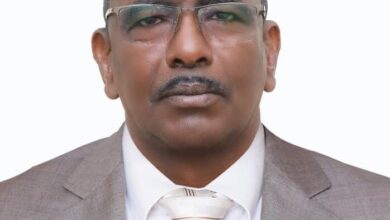
The press conference scheduled for Sunday, August 30, at 12 noon at Al Salam Rotana Hotel represents an important milestone in this process. It will be addressed by the Chairman of the Preparatory Committee, Professor Qasim Badri, along with a number of committee members. The conference moves the initiative from the circle of meetings into the public sphere and presents to local, regional, and international public opinion the outlines of the dialogue project, its objectives, methodology, participation criteria, and guarantees for the quality and integrity of its processes.

Here, in my view, the most important stage begins. The committee’s initiative does not possess a mandate in advance; rather, it builds that mandate through practice. Therefore, it is not required to prove that it represents Sudan, but rather to prove its ability to open the way for Sudanese people to express themselves. The distinction between organizing dialogue and monopolizing its representation is fundamental. Declaring transparency, neutrality, and integrity in deliberations is a strength that must be reinforced and preserved, but it also turns these principles into practical obligations: criteria for selecting participants, management of disagreements, documentation of deliberations, and keeping the public informed, while keeping the door open to those who have reservations without allowing reservations to become exclusion. These are not questions intended to cast doubt, but conditions that can transform the initiative from an idea into a viable national process capable of succeeding.
The committee’s anticipated tours inside and outside Sudan will have significant value if they are aimed at listening, promoting dialogue, and reaffirming its guarantees, rather than importing external balances or seeking an external mandate. Openness to the outside world may support peace, but it must not transfer the Sudanese people’s right to determine their future to other capitals.
At the heart of this, neutrality must mean fairness in managing the dialogue, not treating all positions as equal. No one should be excluded merely because of political differences; the state must not be equated with rebellion; and crimes must not become bargaining chips or tools of blackmail. Political disagreements belong at the dialogue table, while crimes belong to the law and justice.
Among the positive indicators is the government’s decision to review the cases of those accused of cooperating with the Rapid Support Forces, and to legally distinguish between those who participated in the fighting and those who found themselves in areas under its control. If the review is conducted in accordance with the law, it would establish a distinction between criminal responsibility and political position, and between accountability and collective punishment. The principle is clear: no immunity for crime, and no criminalization of political positions.
In the same context, shifts in the positions of some forces, including Dr. Maryam Al-Sadiq Al-Mahdi’s remarks on the importance of moving from declaring positions to making peace, reviewing the classification of civilian forces, and building trust, may open the way for broader participation. This could perhaps lead to the Umma Party joining the dialogue. If approaches are made accordingly, this would be important not to grant it a prize, but to expand the circle of participation, break the sharp polarization, and return politics to its national sphere.
Here lies the essence of the matter: no political entity can reduce Sudan to itself, and no alliance alone possesses the right to represent it. Sudan is greater than parties and political alignments. Therefore, dialogue of the people, not dialogue of the elites, represents a measure of success. The citizen who has paid the cost of war is the one waiting for the results of peace, not for the number of people sitting around the table.
Successful dialogue is not a deal for sharing power, but an opportunity to re-establish the state. The war has exposed imbalances in the relationship between the center and the regions, the management of diversity, civil–military relations, institution-building, and external intervention. Therefore, the dialogue must address the issues of the army, the role of Islamists, the form of government, the relationship between the center and the regions, transitional justice, and external intervention.
At the same time, there are principles that should not be subject to bargaining: Sudan’s unity, ending the war, one national army, and justice. Competition over power, wealth, and representation belongs to politics, not the gun. Marginalization must be addressed through a just state, balanced development, and genuine representation. What is required is dialogue that establishes the state, not one that divides it.
This requires two parallel tracks: a security track that ends the fighting and protects the state and the citizen, and a political track that addresses the roots of the crisis and lays the foundations for a new phase.
A ceasefire alone does not create peace, nor can a political agreement endure unless the causes of the war are addressed. The danger is that dialogue itself could become an arena for conflict through power-sharing arrangements, boycotts, or invoking external actors. Therefore, everyone must move from the logic of dominance to the logic of the state: open dialogue, a Sudanese decision, national standards, and an objective that goes beyond sharing influence toward ending the war and building a state that accommodates the differences among its citizens without mortgaging its future to the outside world.
The most important question, according to #The_Truth_Perspective, is not who enters the dialogue, but what kind of Sudan do we want after the war? A Sudan in which the state monopolizes the use of force, politics is decided through institutions, marginalization is addressed through justice and development, and national decision-making is protected. The success of dialogue should not be measured by the number of elites around the table, but by what it changes in people’s lives: ending the war, returning the displaced, achieving justice, and building the state. Therefore, dialogue must be the voice of the people, not a deal among the elites, for they are the ones who have paid the cost of war, and they are the ones entitled to determine the future of the country.
Wishing you continued health and well-being.
Saturday, August 29, 2026
Shglawi55@gmail.com