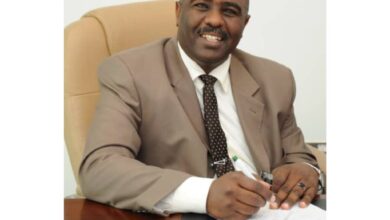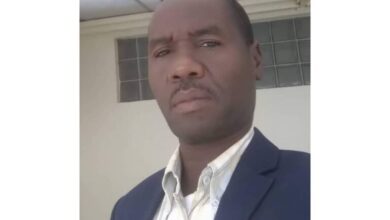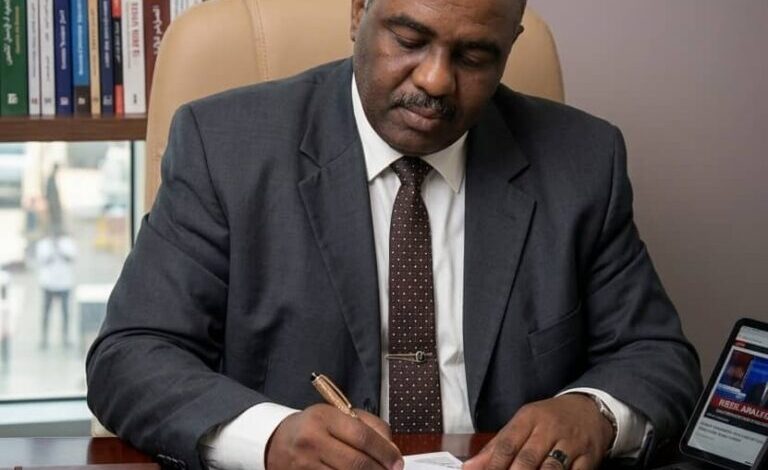
Sudanese novelist Abdelaziz Baraka Sakin arrived in Khartoum yesterday to join the Sudanese Dialogue Preparatory Committee, at an important moment when the country is searching for a way out of its crisis. However, his participation opens the door to reflection on the meaning of dialogue: Is it enough for us to sit together to reach an understanding, or do the differences shaped by the experiences of war require something deeper than simply sitting together?
Baraka Sakin is known for his novels addressing war, poverty, marginalization, and social transformations. He has made writing a window through which to discuss security and peace. Today, he moves into a different arena, one concerned with preparing for dialogue on Sudan’s future. This does not necessarily mean that his positions have changed, nor does it imply that he agrees with all parties. Rather, it allows us to reflect on the distance between expressing convictions and being willing to listen to what lies beyond them. The homeland brings people together around their common ground.


In his novel The Messiah of Darfur, war emerges as a human experience that exposes violence and brutality and reveals what power does when it becomes detached from law and morality. Baraka Sakin portrays the Janjaweed and encapsulates his moral position toward them in the following statement: “It would be easier for a camel to pass through the eye of a needle than for a Janjaweed fighter to enter the Kingdom of God.” In the world evoked by the novel, they are depicted as thick-haired figures who reek of death and hold no regard for the sanctity of blood. This image encapsulates the violence, terror, and bloodshed associated with them in Sudanese collective memory.
In this way, writing transcends the boundaries of storytelling to become a moral condemnation of violence, transforming the Janjaweed from mere participants in a fictional narrative into a symbol of a tragedy experienced by Sudanese people, whose effects remain present in their political and social consciousness.
Sakin has also taken critical positions toward the conduct of the Rapid Support Forces militia, linking the behavior of armed groups to Sudan’s future. Therefore, his participation in preparing for dialogue does not require him to abandon his positions. Rather, it raises a question about the distance between a moral stance and the possibility of seeking a political way out of the war and its suffering.
Since the outbreak of war on April 15, 2023, broad segments of Sudanese society have developed the conviction that the violations committed by the Rapid Support Forces militia make accepting it as a partner in the country’s future exceedingly difficult. This conviction has been reinforced by bloody events in El Geneina, El Fasher, Wad Al-Noura, Al-Hilaliya, and Khartoum, ranging from the killing of civilians, displacement, and looting to ethnic attacks documented by United Nations and human rights reports, which described them as potentially amounting to war crimes and crimes against humanity.
From this perspective, Baraka Sakin’s participation in the Sudanese-Sudanese Dialogue Preparatory Committee should be understood in its proper context. The militia is not part of this dialogue, according to the vision underpinning this process. Preparing for dialogue does not mean granting it legitimacy or opening the door to evading responsibility for violations. The question at hand is how Sudanese people can reclaim their state, end the war, address the causes behind the collapse of the national space, and establish a future that safeguards rights and prevents the recurrence of war.
Here, Friedrich Nietzsche’s approach to critiquing convictions comes to mind. The problem does not lie in the strength of an idea, but in its transformation into a barrier that prevents its holder from seeing reality and renewing the means of action. Standing firm on the sanctity of blood and the rejection of injustice is a principle; reviewing the means, however, is not a surrender of rights, but an effort to protect them more effectively.
An idea does not become a constraint because it is deeply rooted, but when it fails to translate conviction into just conduct, and memory into an awareness that builds the future and protects it from the recurrence of tragedy.
In this sense, Baraka Sakin’s condemnation of the Rapid Support Forces militia does not contradict his participation in preparing for dialogue. The dialogue in question is not a negotiation to grant the militia a place in the country’s future, but an effort to build national consensus around the state, peace, and recovery. The political challenge is to turn this process into action that addresses the roots of the war, rebuilds the state and its institutions, and ensures the protection of civilians.
Therefore, in the Sudanese context, the call for dialogue should not become a demand that victims forget what happened, nor should responsibility for violations be equated with the positions of those demanding accountability. Serious dialogue does not abolish justice, absolve anyone of responsibility, or force society to treat violence as though it were merely a difference of opinion. Rather, it makes it possible to discuss how to end the war, build the state, and ensure that crimes are not repeated, within a process that safeguards rights and establishes accountability.
Sudan, according to #TheFaceOfTruth, needs neither convictions without roots nor positions closed to reconsideration. Condemning violence and upholding rights are moral commitments, but the challenge lies in ensuring that positions do not become barriers that prevent dialogue or an understanding of the complexities of reality. The value of an idea, therefore, is not measured by the rigidity with which it is upheld, but by its ability to combine clarity of principles with flexibility of thought. An idea does not become a constraint because it defends a right, but when it fails to distinguish between steadfastness in principle and reconsideration of the means.
May you remain well and in good health.
Thursday, October 29, 2026
Shglawi55@gmail.com