The Face of Truth | Ibrahim Shglawi … The Dams Implementation Unit: A Model for the Government of Hope

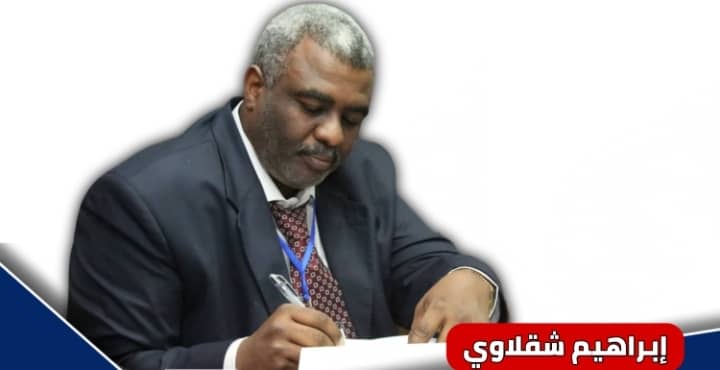
The Face of Truth | Ibrahim Shglawi
The Dams Implementation Unit: A Model for the Government of Hope


At a pivotal moment in Sudan’s history, Prime Minister Dr. Kamal Idris delivered a speech from Port Sudan, announcing the formation of a new “Government of Hope.” In doing so, he laid the foundations for a national project that breaks away from political power-sharing and instead emphasizes competence and integrity. This announcement represents a bold step that the Sudanese people have long awaited—an attempt to redefine the role of the state and its institutions by drawing on successful, real-world experiences that withstood political storms and power struggles.
The Prime Minister identified five root causes of Sudan’s crisis: corruption, weak governance, lack of justice, absence of transparency, and a collapse in societal values. In facing such structural challenges, forming a technocratic government alone is not enough. A deeper reading of successful institutional models is required—such as the Dams Implementation Unit (DIU), a technical and developmental body that has resisted political interference and has been recognized by experts and observers alike for providing practical solutions during times of national hardship.
The DIU emerged in the late 1990s as part of a strategic direction to bridge Sudan’s energy gap and develop large-scale infrastructure projects. It soon evolved into an independent institutional model characterized by professional management, accumulated expertise, and agile administration that transcended bureaucratic constraints. Over more than two decades, the Unit implemented major strategic projects that transformed Sudan’s development landscape, including Merowe Dam, the heightening of Roseires Dam, and the Upper Atbara and Setit dams. It also contributed significantly to complementary infrastructure such as roads, bridges, hospitals, agricultural projects, and water harvesting initiatives.
Despite these accomplishments, the DIU faced considerable challenges due to administrative conflicts and political tensions. It was often perceived as an “outsider” beyond traditional lines of ministerial control. This reflects a broader struggle between two models of public administration: one rooted in tradition, hierarchy, and bureaucracy; and another oriented toward meritocracy, professionalism, and freedom from politicized agendas.
While international and regional donors and development partners praised the DIU’s performance, it faced internal pressures including exclusionary policies, restructuring plans, and fluctuating administrative affiliations. These measures led to the loss of nearly 50% of its workforce under the pretext of “reform.”
The recent conflict in Sudan revealed that the dams were not merely infrastructure projects, but strategic lifelines that helped sustain the state during moments of potential collapse. Hydropower generation from Merowe, Roseires, and Setit became vital after thermal generation shut down. Likewise, critical infrastructure such as the Al-Matamma–Shendi Bridge, Dongola and Karima Bridges, Merowe Hospital, and Al-Shawuk Airport provided essential logistical, medical, and security support. These projects—though politically targeted post-revolution—proved that developmental achievements should not be judged solely by political context, but by their capacity to endure and serve during crises.
Given this context, the DIU stands as a microcosm of the kind of government Dr. Idris envisions: one grounded in professionalism, executional efficiency, and quality—free from political appeasement, and operating under transparent and accountable standards that inspire confidence among international partners.
As Sudan embarks on a new development journey, flexible and effective implementation bodies are urgently needed—particularly for key projects such as the Gadarif Water Project, the Upper Atbara Agricultural Scheme, the Kenana and Rahad projects, and new dam feasibility studies. The country also seeks to advance the “Zero Thirst” national initiative through rural water harvesting and well-drilling, aligned with the UN’s 2030 Sustainable Development Goals.
Hence, a review of the DIU’s administrative structure is warranted to ensure swift decision-making and high-quality execution. Past experience has shown that shifting ministerial affiliations weakened its core and undermined its capabilities. Going forward, placing the Unit under the direct supervision of the Prime Minister or the Sovereign Council may provide it with the political and institutional backing required to carry out its sensitive and vital responsibilities.
Ultimately, rebuilding the state does not begin with changing faces, but with restoring capable institutions—those that have demonstrated their ability to turn plans into reality. The Dams Implementation Unit, with its technical legacy and developmental record, deserves a central role in this long-awaited transformation.
As we see it from The Face of Truth, the Government of Hope cannot be sustained without institutional reform that restores competence as the sole benchmark for nation-building. The DIU’s experience—built through achievements under severe economic constraints—offers a real example of what can be achieved when institutions are trusted, empowered, and freed from bureaucratic burdens. Development is not built on slogans—but through capable institutions. There begins the real shift from the illusion of hope to its realization.
Wishing you peace and well-being.
Saturday, June 21, 2025
📧 Shglawi55@gmail.com