The Truth’s Face | Ibrahim Shglawi … Sudan’s Electricity: The Dilemma of Sabotage and Poor Management..

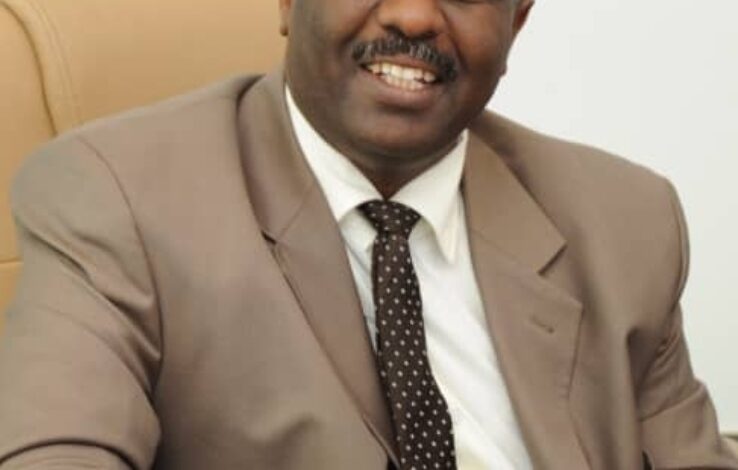
The Truth’s Face | Ibrahim Shglawi
Sudan’s Electricity: The Dilemma of Sabotage and Poor Management..


The phrase “complete blackout… and the electricity gradually returns” has become a familiar daily scene in news reports and electricity updates, reflecting a crisis that Sudan has been living through for years, a crisis that has worsened with the outbreak of war. What happened recently at the Merowe Dam, 1250 MW, when it unexpectedly went offline due to “increased loads” is not an accidental event, but rather one of the faces of the ongoing collapse in this vital sector.
In the current political and security context, the electricity sector has become a mirror reflecting the state’s failure and its inability to ensure the sustainability of basic services. The repeated breakdown of the Merowe Dam from the national grid and the resulting widespread outages, followed by talk of a “partial return,” reveals the fragility of the energy infrastructure and raises significant questions about the state’s ability to secure this sector and the possible scenarios to save it.
The recent power outage has highlighted the accumulated structural problems. The national grid has suffered for years from repeated failures due to the lack of maintenance, weak investment, and outdated equipment. With the war, the situation has worsened with systematic targeting of the infrastructure, especially by the Rapid Support Forces militia, which has deliberately sabotaged electricity transmission and generation stations. The problem is no longer just about power outages; it has disrupted the entire industrial, agricultural, and service production cycle.
Official statistics show that the maximum demand for electricity in 2022 was 3,454 MW, while generation did not exceed 2,744 MW. This gap of 710 MW represents a strategic threat to the national economy, especially with the increasing demand from the industrial and service sectors. In light of this shortfall, scheduled cuts and load shedding have become an official policy, but in reality, they paralyze production, hinder investment, and worsen the suffering of citizens.
The electricity sector in Sudan is managed through a fully state-owned structure, but it suffers from chronic distortions: weak collection, technical and administrative losses estimated at 28% of production, in addition to high operating costs and almost total reliance on fossil fuels. The fuel bill, according to 2022 reports, amounted to about 722 million dollars, while the government subsidy did not exceed 274 million Sudanese pounds, a modest figure that does not cover the structural deficit and does not allow for expansion.
Despite this bleak reality, Sudan has promising opportunities if well exploited. Its potential in solar and wind energy is vast, and renewable energy can represent a strategic solution to reduce reliance on conventional fuel. Additionally, electricity interconnection projects with Egypt and Ethiopia provide an option to enhance supply stability and energy exchange at a lower cost.
One globally tested solution is the public-private or foreign partnership model through the Build-Operate-Transfer (BOT) system, where the investor finances, builds, and operates a generation station for a specific period before transferring it to the state. This model has proven successful in Egypt, Morocco, China, and Turkey, attracting massive investments and achieving leaps in generation efficiency.
In Sudan’s case, BOT could contribute to: attracting foreign funding without burdening the state with direct liabilities, transferring technology and technical expertise, reducing losses and improving efficiency, as well as enhancing transparency and operational efficiency through clear institutional oversight.
However, the success of this model depends on several conditions, the most important of which are: the existence of a regulated and transparent legal framework that protects both the investor and the state, along with political and security stability that encourages investors. Reforming electricity tariffs to reflect actual costs, without overburdening citizens, is also crucial.
Furthermore, it is impossible to talk about revitalizing the electricity sector without addressing the fundamental obstacles, the foremost of which is the systematic sabotage of infrastructure due to the war and the lack of regular maintenance. Sudan suffers from a severe shortage in preventive maintenance operations, which has led to the deterioration of generation stations and transmission and distribution networks, making any new investment in energy threatened from the very beginning.
The strategy to save Sudan’s electricity sector must be based on three main pillars: First, securing the infrastructure against targeting and sabotage, which can only be achieved within a framework of political stability that restores security and peace.
Second: Institutional and structural reform, including governance, transparency, disciplined financial collection, and updating the legal framework to regulate investment.
Third: Supporting foreign and private investment in generation, transmission, distribution, and regular maintenance, especially through partnership models like BOT, and opening the door for renewable energy and regional interconnection.
In light of the intertwined security, economic, and political challenges Sudan faces, according to #TheTruthsFace, the electricity sector stands out as one of the most prominent indicators of the depth of the country’s crisis. The continued outages, the deliberate sabotage of infrastructure, and poor management are all factors leading to further deterioration unless a radical and well-studied intervention is made.
What is happening today in electricity should not be dealt with as just a technical crisis, but rather as a strategic crisis threatening the stability of the state and its ability to achieve economic recovery. Without structural reform and true political will, “Sudan’s Electricity: The Dilemma of Sabotage and Poor Management” will remain an insurmountable title.
Stay well and healthy.
Sunday, September 28, 2025 Shglawi55@gmail.com