The Face of Truth | Ibrahim Shaglawi … The Government of Hope Surrounded by Misfortune and Misjudgment in the Transition

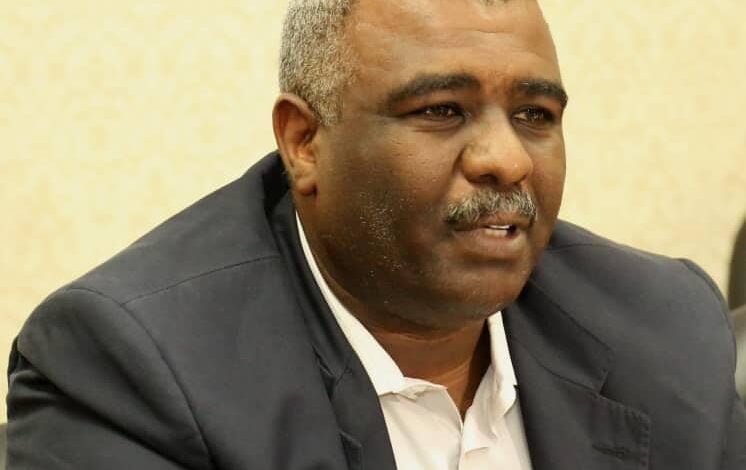
The Face of Truth | Ibrahim Shaglawi
The Government of Hope Surrounded by Misfortune and Misjudgment in the Transition


Since assuming the office of Prime Minister in the Sudanese government, Dr. Kamal Idris appears to be engaged in a battle that goes beyond managing a fragile internal reality. It extends to attempts at rebuilding Sudan’s foreign relations and projecting the image of a transitional government capable of regaining the trust of the region and the world.
However, those attempts, instead of bearing fruit, continue to stumble at every turn, amidst a growing popular sentiment that the government—though technocratic in appearance—lacks political direction and strategic foresight.
The latest of these setbacks was reflected in the visit Idris made to the Kingdom of Saudi Arabia, which was expected to be the beginning of a diplomatic breakthrough that would open the door to major economic and political partnerships, especially amid a sharp decline in internal stability indicators.
But the visit, rather than achieving a breakthrough, became a symbol of political and administrative failure, after a sudden health issue suffered by the Prime Minister overshadowed the visit, leading to the cancellation of scheduled meetings with senior Saudi officials and the postponement of what was said to be an ambitious agenda.
If the Prime Minister had been experiencing any health symptoms or pre-existing conditions—as was later stated in official communications that the incident was due to “exhaustion”—then political and professional logic would have required his advisory and executive team to make wiser decisions, beginning with postponing or rescheduling the visit from the outset.
This was not a visit to a neutral or minor state in terms of influence, but to the Kingdom of Saudi Arabia—with its geopolitical weight and pivotal role in the Sudanese file, whether through economic support or its sponsorship of the Jeddah Agreement and the “Quartet” statements, which have arguably become a reference for many international actors in Sudanese affairs.
Failure in this regard is not merely a protocol mistake; it reflects a worrisome strategic deficiency, especially at a critical juncture for the country.
Sending the head of government on such a significant visit without confirming his physical readiness or logistical preparedness in terms of agenda topics sends an unjustified and troubling message to Sudan’s regional environment.
It also opens the door to interpretations outside the official narrative. Some media platforms or “unrestrained” voices—as they are locally described—may be emboldened to weave stories that touch on the Prime Minister’s personal circumstances or imply non-medical reasons behind his sudden illness, which could damage Sudanese-Saudi relations—long characterized by mutual trust and shared stakes in sensitive issues.
What further amplifies this concern is the timing, coinciding with an official visit by Pakistan’s Prime Minister Shehbaz Sharif, who signed a joint defense agreement with the Saudi leadership and participated in a well-coordinated high-level agenda. A simple comparison between the two visits is enough to highlight the stark gap in planning and outcomes.
While Shehbaz Sharif was received with official ceremonies and signed agreements, Idris found himself lacking key meetings, amid a media storm and a flood of rumors and speculations.
The confusion surrounding this visit is not isolated from the broader context of the disarray the Government of Hope is experiencing, which was also evident in the previous visit to Cairo—where Idris faced similar criticism over a weak agenda and failure to achieve tangible diplomatic progress.
In both cases, the same pattern repeats: a Prime Minister travels without clear results, surrounded by a politically and administratively inexperienced team, dealing with major national stakes with a bureaucratic mindset unfit for his position—or the nature of this critical stage.
This sluggish performance not only affects the government’s image but directly harms the supreme interests of the Sudanese state. Diplomacy, as it is well known, is not merely about meetings or statements—it is about carefully managing balances, precisely timing initiatives, and seizing opportunities wisely.
At a time when regional and international powers are racing to establish their foothold in Sudan, the transitional government appears unable to catch up with that race—instead falling behind and gradually losing credibility in the Arab and African spheres.
Even more troubling is that this kind of performance could reinforce among some regional capitals the notion that the Sudanese government lacks initiative—that it is merely an unstable transitional administration fighting a daily battle for survival with no clear political horizon.
This, in itself, weakens Sudan’s negotiation capacity and affects the future of its foreign relations—especially in files that require strategic partnerships, such as reconstruction, investment attraction, and security and economic cooperation—alongside Sudan’s aspirations for a leading role in the Red Sea and Horn of Africa security framework.
In the final analysis, what transpired during the Prime Minister’s visit to Saudi Arabia is not just an ordinary event, as some have portrayed it, that can be resolved through an official statement or a promise of a future visit. Rather, it is a precise expression of a deep crisis in the state’s political mindset—and in its tools for managing the transitional period, a crisis that must be addressed urgently.
According to #The_Face_of_Truth, the real tragedy lies in the fact that the government, onto which Sudanese citizens pinned their hopes for a path toward peace and development, now seems besieged by misjudgment, misfortune, and a team incapable of grasping the urgency of the national moment.
If this pattern of failure continues, the country will not only lose regional and international support opportunities but could entirely lose its political compass—at a moment when the utmost levels of competence, flexibility, state authority, and strategic clarity are desperately needed. If this imbalance is not corrected swiftly, the hopes attached to this political transition will transform into yet another disappointment—added to a long list of missed opportunities in Sudan’s modern history.
Wishing you all well and in good health.
Saturday, August 20, 2025
Shglawi55@gmail.com